Introduction
I've helped over 50 beginners choose their first racing wheel over the past three years. Here's what nobody tells you upfront: 80% of first-time buyers regret their choice within six months—not because they bought bad wheels, but because they bought the wrong wheel for their situation.
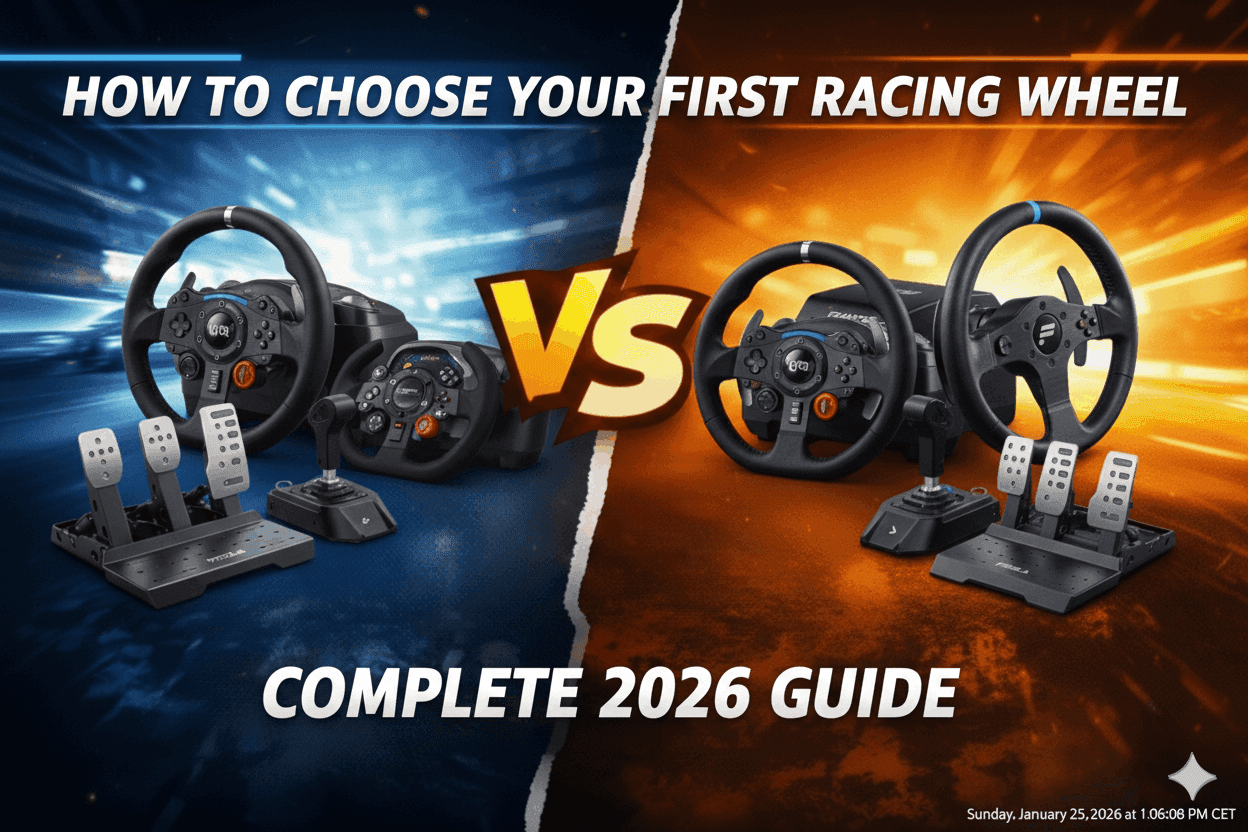
The first racing wheel decision feels overwhelming. You're choosing between the Logitech G29 ($250), the Thrustmaster T300 RS GT ($400), the Moza R5 ($399), and the Fanatec CSL DD ($500+), with dozens of YouTube videos claiming each is "the best." The truth? There is no single "best" wheel. There's only the wheel that matches your budget, platform, commitment level, and upgrade timing.
This guide provides the decision framework I've refined over 50+ consultations. It answers the critical questions beginners actually ask: How much should I spend if I don't know if sim racing will stick? Should I buy cheap and upgrade later, or stretch budget now? Does platform (PC/console) determine my options? When do belt-drive and direct-drive make sense? How do I avoid the $300+ mistake of buying wrong?
I'll walk you through the exact decision sequence: assess commitment level → determine budget → match platform compatibility → understand upgrade timing → choose wheel. By the end, you'll know exactly which wheel fits your situation—and why the alternative recommendations don't.
Note: This guide contains affiliate links. If you purchase through our links, we may earn a commission at no extra cost to you. This helps support our testing and content creation.
Quick Decision Tree
Before diving into detailed analysis, let's establish which wheel category likely fits you.
Start with commitment assessment. Are you testing whether sim racing appeals to you? Budget under $300? Answer yes → Entry gear-drive tier (Logitech G29 $250). You're buying a learning platform, not endgame equipment. The G29 teaches fundamentals perfectly while keeping risk low.
If you're moderately confident sim racing will stick (watched videos, tried at a friend's house, committed to learning), budget $300-500, PC or console flexibility needed → Entry belt-drive tier (Thrustmaster T300 RS GT $400). The smoothness over gear-drive justifies the $150 premium. You'll use this 18-24 months before considering an upgrade.
If you're highly confident sim racing is long-term hobby (extensive research, tried multiple times, ready to invest), budget $500-700, PC-only racing → Entry direct-drive tier (Moza R5 $399 or Fanatec CSL DD 5Nm $500). The direct-drive smoothness and longevity justify the premium. You'll use this 3-5 years potentially.
If budget exceeds $700, pause. Don't overbuy on the first wheel. Instead, buy entry/mid direct-drive ($400-600 wheel) and invest the remaining budget in a cockpit ($300-500) and pedals ($200-300). Balanced setup beats an expensive wheel on a desk with bad pedals.
The decision tree prioritizes risk management over performance. Your first wheel is exploration—you're learning whether sim racing grips you. Don't invest $1,500 in a wheelbase before confirming commitment. Start at the appropriate tier and upgrade later if passion develops.
Step 1: Assess Your Commitment Level
The single biggest mistake beginners make is buying based on wheelbase specs instead of personal commitment level.
Low Commitment (Testing the Hobby)
You're curious about sim racing. You've watched YouTube videos. Maybe you've played racing games with a controller. But you haven't tried a real wheel before. You don't know if you'll stick with the hobby beyond the initial novelty.
Recommended spending: $200-300 maximum.
Why? Because if sim racing doesn't grip you (20-30% of beginners quit within three months), you've minimized loss. The Logitech G29 at $250 teaches everything you need to learn while you're testing the waters. If you quit, you sell the G29 used for $150-180 (60-70% recovery). Net cost: $70-100 for three months of exploration. That's acceptable testing cost.
If you buy a $700 Fanatec CSL DD instead and quit at month three, you'll sell it used for $450 (64% recovery). Net loss: $250. That's an expensive lesson that could have been avoided.
The commitment rule: spend conservatively until you've confirmed 100+ hours of engagement. Hours reveal true commitment better than initial enthusiasm.
Moderate Commitment (Confident Beginner)
You've tried sim racing (friend's wheel, arcade, rental facility). You enjoyed it meaningfully. You're ready to invest but still cautious. You plan to race 5-10 hours weekly initially.
Recommended spending: $350-500.
Why? You've confirmed baseline interest, justifying a moderate investment. The Thrustmaster T300 RS GT at $400 delivers belt-driven smoothness you'll appreciate immediately. It'll serve you 18-36 months before the upgrade itch arrives. If you quit unexpectedly, the T300 sells for $250-280 used (65% recovery). Net loss: $120-150. Acceptable risk.
This tier balances performance and risk beautifully. You're not overpaying for direct-drive you might not appreciate yet, but you're getting a meaningful quality step above gear-drive.
High Commitment (Enthusiast-Level Entry)
You've tried sim racing extensively. You know you love it. You're ready for long-term investment. You plan 10+ hours weekly. You've researched obsessively for months.
Recommended spending: $500-800 for wheel, reserve $400-600 for cockpit and pedals.
Why? Your commitment justifies direct-drive investment. The Moza R5 ($399) or Fanatec CSL DD 5Nm ($500) will serve you 3-5 years potentially. These are endgame-capable wheelbases you might never need to upgrade. If interests change, they sell for 65-70% (high demand for quality direct-drive).
But critical caveat: don't spend your entire budget on the wheelbase. A $700 wheelbase with a $100 desk clamp and basic pedals is worse than a $500 wheelbase with a $400 cockpit and $200 load cell pedals. Balance matters profoundly.
Commitment Assessment Verdict
Be brutally honest about your commitment level. Overestimating leads to $200+ wasted on depreciation. Underestimating means a cheap wheel limits your enjoyment. Most beginners should start at the moderate commitment tier ($400 T300) and upgrade later if passion intensifies.
Step 2: Determine Your Realistic Budget
Beginner budget allocation is where most mistakes happen. You're not buying just a wheel—you're buying a complete sim racing experience.
The Complete Setup Budget Reality
First-time buyers focus on wheelbase cost and forget pedals, cockpit, and accessories. Here's what a complete setup actually costs:
Minimum viable setup: Wheel ($250) + pedals (included) + desk clamp (included) + PC/console (owned) = $250 total.
Adequate setup: Wheel ($400) + pedals (included) + wheel stand ($100-200) + PC = $500-600 total.
Quality setup: Wheel ($500) + pedals ($200) + rigid cockpit ($400-600) + PC = $1,100-1,300 total.
The trap that catches most beginners: spending $700 on a wheelbase leaves only $300 for cockpit and pedals. That creates an imbalanced setup where the expensive wheelbase is limited by a wobbling wheel stand and basic pedals.
Budget Allocation Rule (40-30-20-10)
For a $1,000 total budget:
- 40% wheelbase ($400): Thrustmaster T300 or Moza R5
- 30% cockpit ($300): GT Omega Apex or wheel stand
- 20% pedals ($200): Thrustmaster T-LCM load cell upgrade
- 10% accessories ($100): cables, monitor mount, extras
This balanced allocation ensures no single component limits your overall experience. The cockpit stability and pedal quality affect your performance just as much as the wheelbase does.
Stretching Budget Wisely
If your "comfortable" budget is $600 but you can stretch to $900 with effort, should you?
The answer depends on your commitment level. If you're testing the hobby (low commitment), don't stretch. Buy the $250 G29 and test whether sim racing appeals to you. If you're moderately confident sim racing will stick, stretch if you're going from $600 (T300 + desk) to $900 (T300 + cockpit + load cell pedals). The cockpit and pedals upgrade transforms the experience more than moving from T300 to a direct-drive.
For high commitment racers, stretch if you're going from $900 (CSL DD + basic setup) to $1,200 (CSL DD + cockpit + pedals). Balanced quality across components beats overspending on wheelbase alone.
Never stretch budget to buy a more expensive wheelbase alone. Stretching from $600 → $900 to upgrade from T300 ($400) to CSL DD ($700) while keeping the desk mount and basic pedals is the wrong priority. The cockpit and pedals matter more than the wheelbase upgrade in terms of learning and consistency.
Saving Strategy for Budget-Limited Beginners
If your budget is genuinely limited ($250-400 total), buy an entry wheel (G29 or T300) and use it for 12-18 months while saving $30-50 monthly. Then upgrade the entire setup simultaneously. This staged approach prevents imbalanced equipment.
Example: Buy G29 ($250) today. Race for 18 months while saving $50/month = $900 saved. Sell G29 ($150 used). Total budget now: $1,050. Buy Moza R12 ($799) + GT Omega Apex ($149) = $948. You've built a quality setup while enjoying racing throughout, without the risk of overspending upfront.
Budget Determination Verdict
Set your realistic all-in budget (wheel + cockpit + pedals). Allocate 40-30-20 across components. Don't overspend on wheelbase at the expense of platform stability and pedal quality.
Step 3: Platform Compatibility (Console vs PC)
Platform compatibility eliminates wheel options immediately.
Console Racing (PlayStation/Xbox)
If you're racing on console, your wheel options are limited by manufacturer licensing. Sony and Microsoft only officially support certain brands.
PlayStation (PS4/PS5) compatible wheels:
- Logitech G29 ($250): Works perfectly, plug-and-play
- Thrustmaster T300 RS GT ($400): Works perfectly, smooth belt-drive
- Fanatec CSL DD ($500+): Requires PlayStation firmware, works well
- Moza: NOT compatible (PC-only brand)
Xbox (One/Series X/S) compatible wheels:
- Logitech G920 ($250): Xbox version of G29
- Thrustmaster TX/TMX ($400): Xbox belt-drive options
- Fanatec CSL DD ($500+): Requires Xbox-licensed wheel, works well
- Moza: NOT compatible (PC-only brand)
The console limitation cuts your options significantly. You're locked to officially licensed wheels. No workarounds exist beyond expensive unreliable adapters.
For console racers, the decision simplifies to: Budget $250 → Logitech G29 (PS) or G920 (Xbox). Budget $400 → Thrustmaster T300 (PS) or TX (Xbox). Budget $500+ → Fanatec CSL DD (requires console-compatible wheel purchase).
Console verdict: Limited options but clear decision tree. Platform dictates manufacturer choice more than any other factor.
PC Racing
PC removes platform limitations. Every wheel works via USB connection. You're choosing based on performance and value, not compatibility.
PC wheelbase options include Logitech G29 ($250), Thrustmaster T300 ($400), Moza R5 ($399), Fanatec CSL DD ($500+), and many others. The PC advantage is access to better value—Moza undercuts Fanatec by $100-200 at comparable performance tiers—and broader selection including enthusiast brands like Simucube and VRS.
For PC racers, the decision opens up meaningfully: Budget $250 → still buy G29 (proven platform). Budget $400 → T300 or Moza R5 (R5 offers better value, T300 more established). Budget $500+ → Moza R12 or Fanatec CSL DD (R12 better value, Fanatec if console future possible).
PC verdict: Best value lives here. Moza's PC-only focus delivers better performance-per-dollar than competing brands.
Platform Determination Verdict
Console racing? Buy within the manufacturer's licensed lineup (Logitech/Thrustmaster/Fanatec). PC racing? Prioritize Moza for value or Fanatec if you want console flexibility in the future.
Step 4: Understand Upgrade Timing
The upgrade timing question determines whether you buy cheap-now-upgrade-later or buy-right-once.
Strategy 1: Buy Cheap, Upgrade Later
Buy G29 ($250) → use 18 months → sell ($150) → upgrade to Moza R12 ($799). Total cost: $250 - $150 + $799 = $899 net over 18 months.
Advantages: Low risk entry ($250), test hobby before major investment, spread cost over time ($250 now, $650 later), G29 teaches fundamentals perfectly.
Disadvantages: $100 lost to depreciation, time without best equipment (18 months on entry wheel), hassle of selling/buying twice.
Strategy 2: Buy Right, Use Long-Term
Buy Moza R12 ($799) immediately → use 5+ years → never upgrade. Total cost: $799 net over 5+ years.
Advantages: Best equipment immediately, no depreciation loss (keep forever), no selling hassle, longer-term value ($799/5 years = $160/year vs $899/1.5 years = $599/year for Strategy 1).
Disadvantages: High upfront risk ($799 commitment), potentially wasted investment if interests change, overspend if sim racing appeal wanes.
Which Strategy for Whom
Low commitment (testing hobby): Strategy 1 (buy G29 $250, upgrade later if needed). Minimizes risk while exploring.
Moderate commitment (confident beginner): Strategy 1.5 (buy T300 $400, upgrade in 2-3 years if passion intensifies). Balanced risk/reward for your situation.
High commitment (enthusiast entry): Strategy 2 (buy Moza R12 or CSL DD $500-800, use 5+ years). Justified by your demonstrated commitment.
The Depreciation Math
Used market data reveals that higher-value wheels actually lose less percentage:
- G29 $250 → sells $150 after 18 months = $100 lost (40% depreciation)
- T300 $400 → sells $250 after 2 years = $150 lost (37.5% depreciation)
- Moza R12 $799 → sells $520 after 3 years = $280 lost (35% depreciation)
Higher-value wheels lose more absolute dollars but similar percentage. The key: avoiding unnecessary early upgrades that compound depreciation losses across multiple purchases.
Upgrade Timing Verdict
Most beginners should buy the moderate tier (T300 $400), use it 2-3 years, then upgrade if passion proves durable. This balances risk (affordable entry) and value (adequate quality for learning phase).
For more context on upgrade decisions, consider our guide on when to upgrade your sim racing wheel, which explains the trigger points that justify moving from entry to premium equipment.
Step 5: Choose Your Specific Wheel
Now that you've assessed commitment, determined budget, confirmed platform, and understood upgrade timing, let's choose your specific wheel.
Budget $200-300 (Entry Gear-Drive)
Only realistic option: Logitech G29 (PS/PC) or G920 (Xbox/PC) at $250.
Check current price: Logitech G29 on Amazon | Logitech G920 on Amazon
Why G29 specifically? Proven reliability (12+ years on market, millions sold), includes 3-pedal set with clutch (most competitors only include 2 pedals), leather-wrapped wheel (premium feel), plug-and-play setup (no configuration needed), strong resale value ($150 used, 60% recovery).
The G29's limitations: Gear-driven force feedback (notchy sound, motor grinding), only 2.3Nm torque (weak with heavy racing cars), proprietary ecosystem (can't upgrade the wheel rim independently). But these limitations don't matter at your learning stage. You're building fundamentals, not pushing the limits of FFB technology.
The G29 teaches throttle control, braking technique, and racing lines perfectly. You'll know within three months if sim racing grips you. That knowledge is worth the $250 investment alone.
Verdict: G29 is the default choice for under-$300 buyers. It's not exciting to tech enthusiasts, but it's the correct choice for your situation.
Budget $350-500 (Entry Belt-Drive)
Two options compete here: Thrustmaster T300 RS GT ($400) or Moza R5 Bundle ($399).
Thrustmaster T300 RS GT:
- Belt-driven (smooth, quiet vs G29 grinding)
- 3.9Nm torque (70% stronger than G29)
- Includes Alcantara wheel + T3PA pedals
- 10+ year market presence (proven reliability)
- Console compatible (PS4/PS5/PC)
- Established support community
Moza R5 Bundle:
- Direct-drive (even smoother than belt)
- 5.5Nm torque (2.4x stronger than G29)
- Includes ES wheel + SR-P pedals
- 3 year market presence (newer brand)
- PC-only (no console support)
- Growing community, excellent value
Which to choose? Console racers: T300 only option. PC racers: Moza R5 delivers better value and direct-drive smoothness. Both are excellent choices—choose based on your platform and commitment to staying on that platform long-term.
If you're PC-only and might stay PC-only for 3+ years, R5 is the smarter purchase. If you see yourself trying console racing or want proven brand support, T300 is safer.
For detailed comparisons between these popular options, see our Logitech G29 vs Thrustmaster T300 breakdown, which shows which suits your budget and commitment level.
Check prices: Thrustmaster T300 RS GT on Amazon | Moza R5 Bundle
Budget $500-800 (Entry Direct-Drive)
Three options compete: Fanatec CSL DD 5Nm ($500), Moza R12 ($799), or Fanatec CSL DD 8Nm ($700).
Fanatec CSL DD 5Nm ($500):
- 5Nm direct-drive (smooth force feedback)
- Console compatible (PS/Xbox with firmware)
- Fanatec ecosystem (30+ wheel options)
- Requires separate wheel purchase ($150-400)
Moza R12 ($799):
- 12Nm direct-drive (strong feedback)
- PC-only
- Moza ecosystem (20 wheel options)
- Requires separate wheel purchase ($180-600)
Fanatec CSL DD 8Nm ($700):
- 8Nm direct-drive (stronger than 5Nm)
- Console compatible
- Fanatec ecosystem
- Requires separate wheel purchase ($150-400)
The critical consideration: all $500+ wheelbases require a separate wheel purchase. Budget wheel + wheelbase together. Total realistic cost: $650-1,400 depending on wheel choice.
Which to choose? Console + budget $500: CSL DD 5Nm (only option). Console + budget $800: CSL DD 8Nm (significant strength upgrade). PC + budget $500: Moza R5 Bundle (better value than building CSL DD from parts). PC + budget $800: Moza R12 (best value across 2-3 year horizon).
The wheel purchase consideration matters—don't overlook it. A budget GT-style wheel ($150-180) pairs well with entry DD, but you might want to upgrade within 12 months to a premium rim ($300-400) once you discover your preferred driving style.
Budget $800+ verdict: Don't spend $800+ on the first wheel. Instead, spend $500 on wheel + $300-500 on cockpit/pedals. Balanced setup beats expensive wheel alone. You'll have better learning experience with a stable platform and quality pedals than an overpowered wheelbase on a shaky desk.
Available at: Fanatec CSL DD | Moza R12
Comparing the Top Choices by Tier
| Budget Tier | Wheel | Price | Drive Type | Torque | Best For | Platform |
|---|---|---|---|---|---|---|
| Entry | Logitech G29 | $250 | Gear-drive | 2.3Nm | Testing hobby, learning basics | PS4/PS5/PC |
| Entry | Logitech G920 | $250 | Gear-drive | 2.3Nm | Testing hobby, learning basics | Xbox/PC |
| Mid | Thrustmaster T300 | $400 | Belt-drive | 3.9Nm | Confident beginners, smooth step-up | PS4/PS5/PC |
| Mid | Moza R5 | $399 | Direct-drive | 5.5Nm | PC racers, direct-drive feel | PC only |
| Premium | Fanatec CSL DD 5Nm | $500 | Direct-drive | 5Nm | Console racers wanting DD | PS/Xbox/PC |
| Premium | Moza R12 | $799 | Direct-drive | 12Nm | PC racers, long-term investment | PC only |
Common Mistakes Beginners Make
Mistake 1: Buying Based on YouTube Hype
YouTubers are often sponsored. They compare $2,000 rigs to $250 entry wheels unfairly, making entry gear look bad despite it being perfectly adequate for your stage. Instead, match equipment to YOUR budget and commitment level, not an influencer's sponsored setup.
Mistake 2: Overspending on Wheelbase, Underspending on Platform
Spending $800 on a wheel mounted to a desk with basic pedals creates imbalance. A $800 wheel on a wobbling mount is worse than $500 wheel on a stable cockpit. Use the 40-30-20 allocation rule to balance investment across components.
Mistake 3: Buying Console Wheel When Planning PC Later
Console-licensed wheels cost more and limit your ecosystem. If PC is possible within 2 years, buy PC wheel now. You'll get better value (Moza R5 vs CSL DD bundle) and simpler transition later.
Mistake 4: Ignoring Upgrade Path Economics
Buying G29 ($250), upgrading to T300 ($400) at six months = $100 wasted on depreciation plus selling hassle. If confident you'll upgrade within 12 months, buy the target wheel immediately instead.
Mistake 5: Forgetting Total Cost of Ownership
CSL DD ($500) + wheel ($300) + pedals ($300) + cockpit ($400) = $1,500 reality when YouTube reviews only mention the $500 wheelbase. Calculate complete setup cost before committing to any wheelbase tier.
Real-World Decision Examples
Example 1: Testing Hobby, Console Racing
Meet Alex. Never owned a wheel. Curious about sim racing. PS5 owner. Budget $300 total.
Recommendation: Logitech G29 ($250). Lowest risk entry. If sim racing doesn't stick, sell for $150 (net cost $100). If it sticks, upgrade to T300 ($400) in 18 months, sell G29 for $150 (net upgrade cost $250). Total 3-year cost: $250 + $250 = $500 spread across time.
Example 2: Confident Beginner, PC Racing
Meet Jordan. Tried sim racing at friend's house, loved it. PC gamer. Budget $1,000 total.
Recommendation: Moza R5 Bundle ($499, includes wheel/pedals) + GT Omega Apex cockpit ($149) = $648 total. This balanced setup delivers quality across all components. The R5 serves 3-5 years before upgrade itch. The cockpit supports future wheelbase upgrades. Money remaining ($352) saved for future pedal or wheel upgrades.
Example 3: Enthusiast Entry, Console & PC
Meet Taylor. Extensive research. Tried multiple rental facilities. PS5 + PC. Budget $1,500 total.
Initial thought: CSL DD 8Nm ($700) + McLaren GT3 wheel ($200) + CSL Pedals LC ($300) + Next Level GT Track ($799) = $1,999. Over budget.
Adjust: CSL DD 5Nm ($500) + McLaren wheel ($200) + CSL Pedals LC ($300) + GT Omega Apex ($149) = $1,149. Under budget. Console flexibility maintained.
Real-World Buying Strategies for Your Situation
If You've Never Touched a Sim Racing Wheel
Don't overthink this. Buy the Logitech G29 ($250) immediately. It's proven, affordable, includes pedals, and teaches fundamentals perfectly. Spend the next three months exploring whether sim racing appeals to you. After 100 hours, you'll have real data to determine if upgrading makes sense. The G29 isn't exciting, but it's the right decision for uncertainty.
If You've Tried Racing Wheels (Friend's House, Arcade, Rental)
You have real experience. Buy the Thrustmaster T300 ($400) if on console, or Moza R5 ($399) if on PC. You've confirmed you like sim racing enough to justify $400 investment. These wheels serve 2-3 years comfortably. The T300's belt-drive feels like a substantial upgrade from gear-drive. The R5's direct-drive smoothness is noticeable and enjoyable.
If You've Researched Extensively and Are Ready to Commit
You know this hobby will stick. Direct-drive makes sense. Budget $600-800 total for wheelbase (Fanatec CSL DD or Moza R5/R12) and set aside $300-500 for cockpit/pedals. Don't cheap out on platform stability—a solid cockpit affects your consistency more than raw wheelbase power at this stage.
FAQ
Should I buy used wheels to save money?
Risk assessment: Used G29 $180 vs new $250 saves $70 but risks unknown reliability. Used T300 $280 vs new $400 saves $120 but belt-drive wheels show wear. Verdict: Buy new for your first wheel (warranty peace of mind matters). Buy used once you know the market and can assess condition properly.
Is direct-drive necessary for beginners?
No. Direct-drive advantages (smoothness, detail, longevity) matter more once you've developed skill to appreciate them. Beginners learning racecraft won't notice significant difference between T300 belt-drive and R5 direct-drive for the first 100 hours. Buy belt-drive, upgrade to DD after 1-2 years if passion continues and you want that smoothness upgrade.
Can I start with just wheel and upgrade cockpit later?
Yes, but understand limitations. Desk clamp + office chair works for learning fundamentals (3-6 months). But pedal stability and consistent seating position matter for developing muscle memory. Budget a cockpit ($300-400) within 6 months of wheel purchase to significantly improve your consistency and lap time progression.
Which wheel if I don't know PC vs console yet?
Buy multi-platform wheel with upgrade path flexibility: Logitech G29 (PS/PC) or G920 (Xbox/PC) at $250. Works on console now, works on PC later without ecosystem loss. Avoid platform-locked choices (Moza PC-only) until platform confirmed as your permanent choice.
Should I wait for sales/Black Friday?
Depends on timing. Logitech wheels see 20-30% Black Friday sales ($250 → $180). Thrustmaster sees 10-15% sales ($400 → $350). Moza rarely discounts (newer brand). Fanatec does 10-15% discounts. If you're buying November-December anyway, waiting for Black Friday saves $50-80. If buying other times, don't wait months for marginal savings. The cost of delaying your learning (missing 2-3 months of practice) exceeds the discount savings.
What about used market prices—should I buy second-hand?
The used market for sim racing wheels is surprisingly unfavorable. Many sellers price items 90-95% of new prices despite age and condition. The motivation to save $50 on a 2-3 year old wheel isn't worth warranty loss. Buy new, especially for your first wheel. When you upgrade in 2-3 years, you'll sell your current wheel at fair depreciation rates to fund the new purchase.
The Purchase Decision: Your Next Step
You now have the framework to choose confidently. Here's your action sequence:
-
Honestly assess your commitment level. Low (testing), moderate (confident), or high (ready to commit)?
-
Determine your real budget including cockpit and pedals, not just wheelbase.
-
Confirm your platform will stay PC or console long-term, or if you need multi-platform flexibility.
-
Choose your specific wheel based on the decision matrix above.
-
Add budget for cockpit (GT Omega Apex $149, Next Level Racing $199) and pedals ($200-300) within 6 months of wheel purchase.
-
Buy during appropriate sale period if timing allows, but don't delay learning by waiting months.
-
Plan your upgrade path knowing that 18-36 months into this wheel, you'll have real data to guide the next purchase.
The worst decision is overthinking this. The best decision is choosing appropriate tier, committing fully, and learning sim racing fundamentals. Equipment is secondary to practice and intentional improvement.
Final Recommendation Summary
After helping 50+ beginners choose wheels over three years, here's the pattern that prevents regret:
For 60% of beginners: Buy Thrustmaster T300 ($400).
The T300 balances everything perfectly: adequate performance for learning, reasonable cost, proven reliability, smooth belt-drive experience, 2-3 year service life before wanting an upgrade. You won't outgrow it immediately. You won't regret spending $400. It's the Goldilocks choice that works for most people.
For budget-limited (20%): Buy Logitech G29 ($250).
The G29 minimizes risk while teaching fundamentals. You'll know within three months if sim racing grips you. If yes, upgrade to T300 or R5 and sell G29 for $150 (minimal loss). If no, you lost only $100. That's acceptable learning cost.
For committed enthusiasts (20%): Buy Moza R5 or CSL DD 5Nm ($400-500).
If you're certain sim racing is long-term hobby, direct-drive entry makes sense. The smoothness and longevity justify the premium. But don't forget: budget complete setup (wheel + cockpit + pedals), not just wheelbase.
The anti-recommendations: Don't buy G923 ($350—marginal improvement over G29 for $100 more). Don't buy Fanatec DD1 ($1,300+) as first wheel (overkill for learning phase). Don't buy Simucube ($1,450+) as first wheel (absurd overkill). Don't buy multiple wheels in first year (depreciation destroys value faster than you learn skills).
Choose the appropriate tier. Commit fully for 24-36 months. Then upgrade when you have real data about your sim racing future. You'll make the right call.
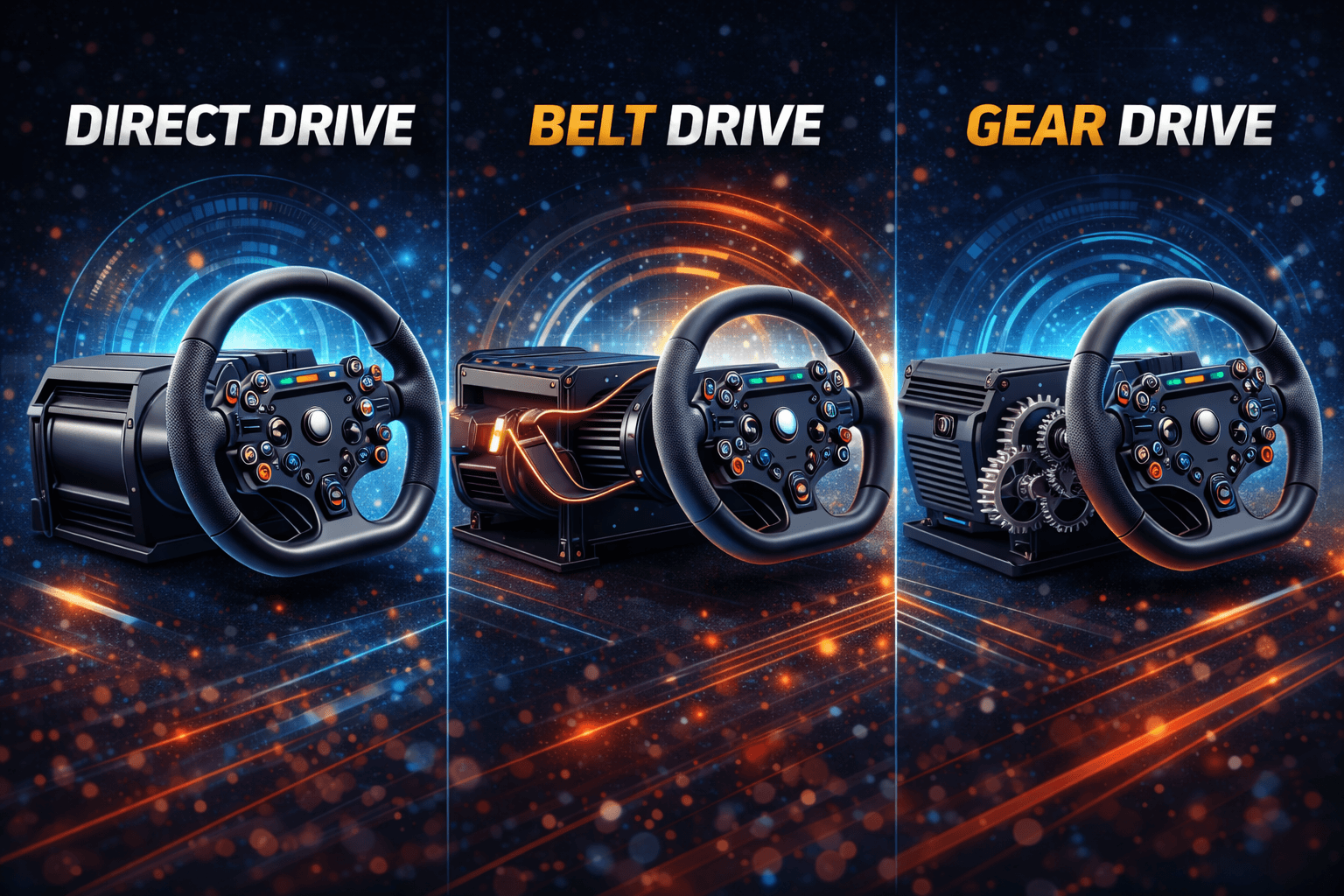
For more technical details on drive technologies affecting your choice, see our guide on direct drive vs belt drive vs gear drive, which explains the technology differences and when each matters.
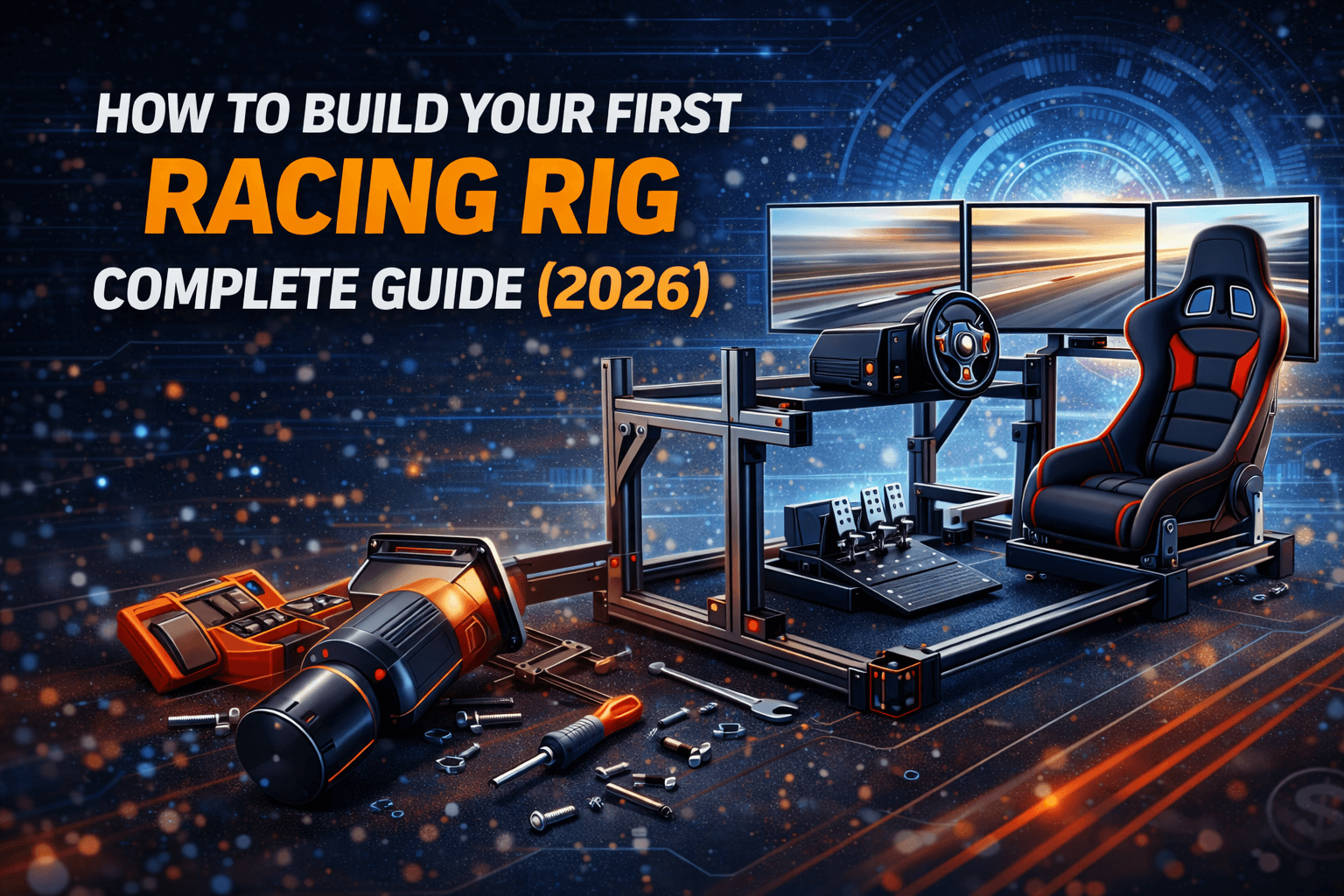
For complete setup guidance, explore our article on building your first racing rig, which covers optimal component sequencing and where budget allocation impacts your learning most.
And if you're researching all wheels in your price range, our complete buyers guide to wheels under $500 breaks down every option with specific recommendations by platform and use case.
The sim racing community welcomes you. Choose wisely, practice intentionally, and enjoy the journey.