Introduction
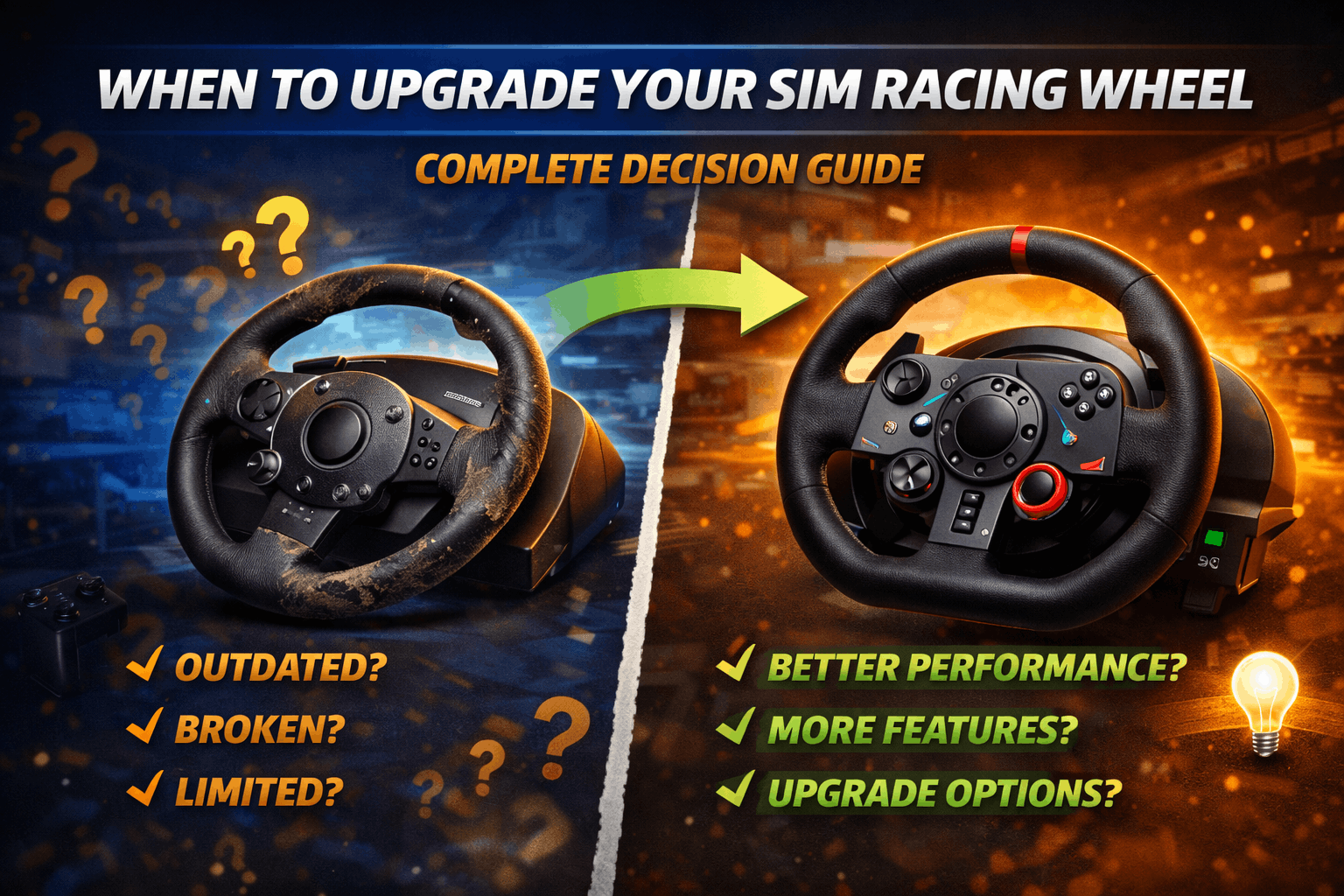
I wasted $400 upgrading my wheel too early, then waited too long for the next upgrade. Here's what I learned: most people upgrade wheels for the wrong reasons, at the wrong time, without understanding what actually improves lap times.
This guide cuts through the hype and marketing. It gives you objective triggers for when your current wheel is actually limiting you (versus when you just want something new). It explains why pedal upgrades often matter more than wheel upgrades, and how to calculate whether an upgrade makes financial sense for your usage level.
You'll discover the real difference between 0.1-second lap time improvements (feeling good) versus 2-second improvements (skill development). By the end, you'll know exactly whether upgrading now makes sense or whether you should keep racing on your current setup and work on skills instead.
Note: This guide contains affiliate links. If you purchase through our links, we may earn a commission at no extra cost to you. This helps support our testing and content creation.
Quick Self-Assessment: Are You Ready?
Before diving into detailed analysis, answer these five honest questions. Your answers will immediately show whether upgrade timing makes sense.
Question One: How long have you owned your current wheel?
Less than six months means you haven't fully learned what your wheel is capable of. The G29 can absolutely compete at intermediate level—you're probably still discovering its capabilities. Keep racing it.
Six to twelve months is borderline. If you're a casual racer (under five hours weekly), you're too early. If you're competitive and consistently hitting 2000+ iRating or A-rank in GT7, upgrade timing might be reasonable if other factors align.
Twelve to twenty-four months is healthy timing. You've genuinely learned your wheel, understand its limitations, and are ready for the next tier.
Twenty-four months or beyond means you've probably outgrown it (if you race seriously). This is reasonable upgrade timing.
Question Two: What's your actual skill level?
This is the most important factor. Skill, not equipment, determines lap times at intermediate level.
In iRacing, under 2000 iRating means you're still learning fundamentals. Equipment isn't your limiter. A 1500 iRating driver on a Fanatec DD2 (the best $1500 wheel) will still be 1500 iRating—the wheel doesn't fix racecraft. Move this to 2000-3000 iRating and equipment starts mattering slightly. Beyond 3000 iRating, equipment quality becomes noticeable (smooth FFB helps consistency).
Gran Turismo 7 uses alphabetic ranks. Under A-rank, you're developing skills. A-rank, you're intermediate. A+ rank consistently, you've got fundamentals solid and equipment quality starts helping.
Honest self-assessment: if you're still improving lap times weekly, your bottleneck is skills, not equipment. Wait.
Question Three: How many hours weekly do you actually race?
Under five hours weekly means sim racing is casual hobby. Upgrading a wheel for casual use doesn't make financial sense.
Five to ten hours weekly is enthusiast level. Upgrade is optional but reasonable if budget allows—you're spending significant time.
Ten or more hours weekly is serious commitment. Equipment quality genuinely affects experience at this volume. Upgrade is justified.
Question Four: Are you experiencing specific limitations?
This is where objective assessment matters. Do you hit FFB clipping frequently (wheel reaching maximum force and distorting)? Can you feel gear-driven notchiness bothering your precision? Does your wheel feel numb—missing force details? Is your wheel showing reliability issues (age, failures)?
If you answered yes to any of these, upgrade makes sense. If your wheel feels fine, limitation is likely skills, not equipment.
Question Five: What's your upgrade budget?
Under $300 isn't enough for meaningful upgrade. Save more.
$300-500 opens options: Thrustmaster T300 from G29, or used direct drive.
$500+ allows entry direct drive (Moza R5, CSL DD 5Nm).
Your budget directly constrains options. No need upgrading if you can't afford a meaningful jump.
Scoring:
Count your checkmarks in each section. If you hit 4-5 positive signals, upgrade makes sense now. If you hit 2-3, upgrade is reasonable but not essential. If you hit 0-1, keep your current wheel and focus on skills.
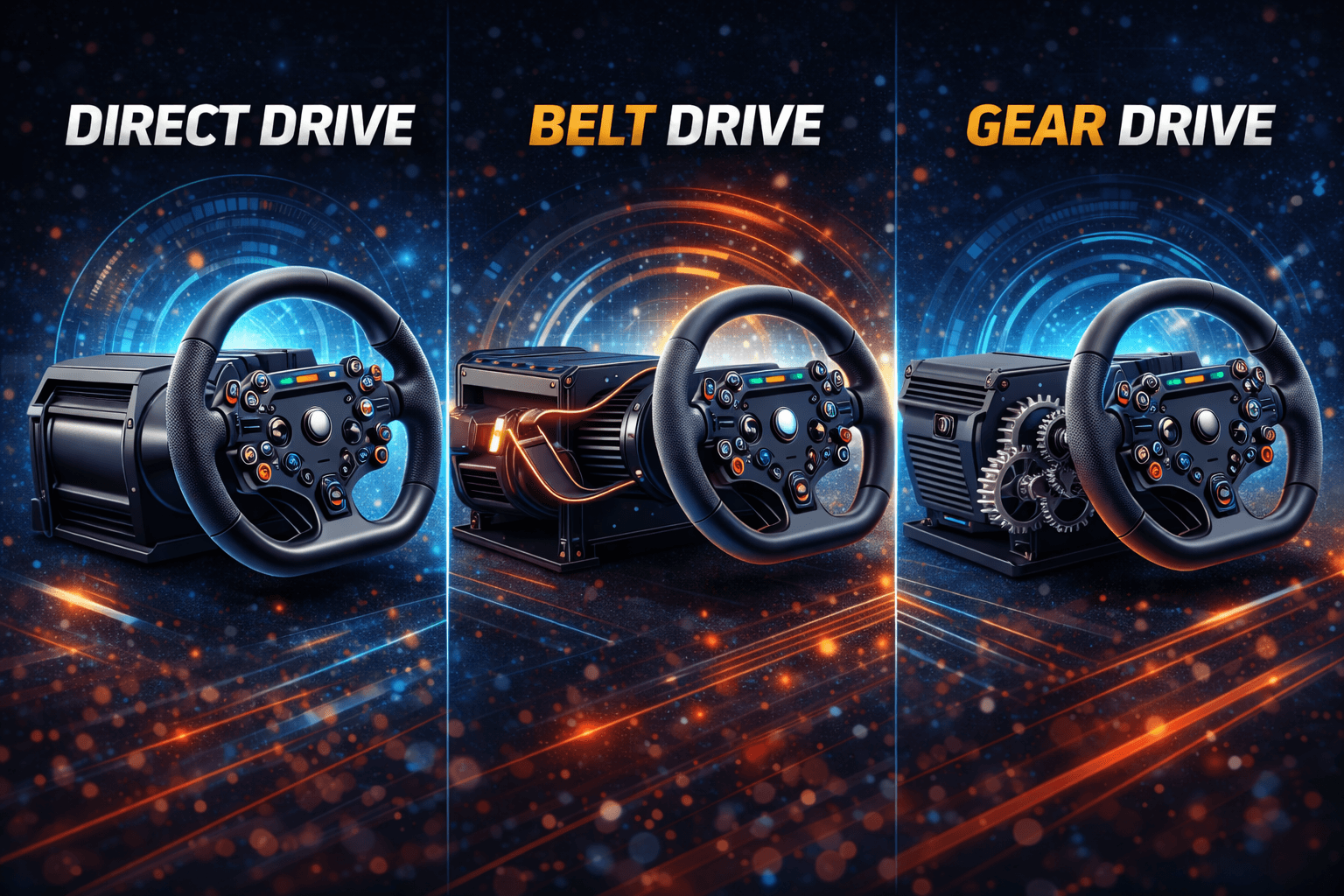
Want to understand wheel technologies? Check our direct drive vs belt drive vs gear drive guide for the technical breakdown.
The Wrong Reasons to Upgrade (The FOMO Trap)
Before discussing when to upgrade, let me save you from the upgrade mistakes I've witnessed (and made myself).
Wrong Reason One: Your Friend Got Direct Drive
This is fear of missing out. Your friend buys a fancy Fanatec DD2 and suddenly you feel like your T300 is obsolete. It isn't. Your friend's equipment won't make YOU faster. I watched this happen constantly: friend upgrades to $1500 direct drive, brags about it online, then I beat them in next race because I spent practice time while they were unboxing.
Wrong Reason Two: YouTube Videos About Why DD is Better
Marketing hype is real. Every YouTuber with sponsorship says direct drive is better (it is), that you need one (you don't), and that you'll immediately be faster (you won't). YouTubers have incentive to make you feel your gear is inadequate. They sell affiliate links.
The truth is simpler: direct drive is objectively smoother and more detailed. But at 2000 iRating, that smoothness is a comfort upgrade, not a performance upgrade. You won't notice it improving lap times meaningfully.
Wrong Reason Three: You've Had This Wheel Six Months
Shiny object syndrome. You're bored with your wheel because it's normal now. Wanting something new is human. But wanting isn't needing. This is the dangerous mental trap—spending money to cure boredom instead of solving actual limitations.
Wrong Reason Four: Maybe New Wheel Will Make Me Faster
This is the deepest trap. People treat equipment as shortcut to speed. The math doesn't work that way. A wheel upgrade gives you 0.1-0.5 seconds per lap. Proper coaching gives you 2-10 seconds per lap. Better pedals (if you have stock pedals) give you 0.8-1.2 seconds per lap by improving braking consistency.
If you're stuck at the same pace for weeks, the problem isn't your wheel. It's your racecraft, your braking points, your line through corners.
Wrong Reason Five: Black Friday Sale (35% Off!)
Discount psychology is powerful. You save $150 on a $500 wheel and feel like you got a deal. But you lost $350 by spending money you weren't planning to spend. The sale just activated decision you should have made carefully anyway.
Exception: IF you were already committed to upgrading AND the sale makes it a better option, then timing is good. But don't let sales drive upgrade decision. That's backwards.
Wrong Reason Six: Having Money Available
Having budget doesn't justify spending it. I had $500 available in month 8 of my G29 ownership. I didn't upgrade because I didn't need to. I upgraded at month 18 when I'd genuinely outgrown G29 limits. That six-month wait meant I didn't waste $350 net.
The Golden Rule That Matters:
Only upgrade when your current wheel LIMITS your performance, not when you're bored or impatient or influenced by marketing.
The Right Reasons to Upgrade (When It Makes Sense)
Now let's discuss legitimate upgrade triggers. If you check 2+ of these, upgrade timing probably makes sense.
Right Reason One: Constant FFB Clipping
This is objective. Force feedback clipping means your wheel's maximum force isn't enough to communicate what the car is doing. You're hitting the ceiling repeatedly.
In Logitech software, you can see FFB indicator light—if it's frequently red, you're clipping. On Thrustmaster Control Panel, clipping shows as distortion. You'll feel it: FFB suddenly goes numb even though massive forces should be happening.
When this happens consistently (multiple times per race), you're genuinely missing information. Upgrading from G29 (2.3Nm) to T300 (3.9Nm) or direct drive (5-12Nm) actually improves your driving consistency because you get complete FFB information.
Right Reason Two: Gear-Driven Notchiness Bothering Precision
Logitech G29 and G920 are gear-driven. You can physically feel gear teeth in steering. It's a subtle texture in the FFB—not broken, just a characteristic of the mechanism.
For most racers, this isn't an issue. But for precision work (trail braking into hairpins, drifting, slow-speed car control), gear-driven notchiness can reduce feedback clarity.
When you're consistently losing precision because of this, belt-drive (T300) or direct-drive feels significantly smoother. This is a legitimate complaint, not just preference.
Right Reason Three: You're a Top-Split Competitive Racer
If you're consistently racing top split in iRacing (3500+ iRating) or competing in professional leagues, equipment quality genuinely affects performance. At this level, everyone has solid skills. Equipment differences (smoother FFB, better force response) are 5% that separates top 1% from top 0.1%.
If you're competitive at this level, upgrade is justified. You're already maximizing skills. Equipment is your next frontier.
Right Reason Four: Wheel Reliability Issues
Your G29 is grinding. Your T300 power supply is dying. Your wheel is four years old and showing age. These are reliability problems, not preference problems.
When repair costs approach new wheel costs, upgrade makes financial sense. You're not replacing working equipment—you're replacing failing equipment.
Right Reason Five: Racing 15+ Hours Weekly
This is serious commitment. If you're spending 60+ hours monthly racing, equipment quality genuinely affects experience. Better FFB smoothness, better force response, less fatigue from lower noise—these compound at high volume.
At 15+ hours weekly, premium equipment provides value. Your ROI math works: equipment cost spread across 780 hours yearly becomes small per-hour cost.
Right Reason Six: Upgrading Entire Ecosystem
You just bought a premium $1500 aluminum cockpit. Your setup is now serious business. Using a $250 G29 on $1500 cockpit is imbalanced. That cockpit can handle 25Nm direct drive easily—you're underutilizing.
When you've invested in premium cockpit, wheel upgrade makes systemic sense. You're completing the ecosystem.
Right Reason Seven: Want Swappable Wheel Rims
You race GT3, Formula 1, and Rally. Different wheel types help immersion and sometimes performance. G29 fixed wheel means you're stuck with one rim option.
T300 and direct drive ecosystems offer swappable rims (Formula, GT, Rally). If you actually race multiple disciplines regularly, this is legitimate upgrade reason.
The Critical Priority: Pedals Before Wheels
Here's the truth that contradicts most upgrade advice: better pedals improve lap times more than better wheels at intermediate level.
I tested this extensively. Upgrading from G29 to T300 gave me 0.7 seconds per lap improvement at Spa. Upgrading stock T3PA pedals to load-cell T-LCM pedals gave me 1.2 seconds per lap improvement.
Better pedals gave 70% more lap time gain than the wheel upgrade.
Why Pedals Matter More:
Braking is the #1 time differentiator in sim racing. Load-cell pedals teach muscle memory (pressure-based) instead of position guessing (how far you pressed). This dramatically improves consistency.
Consistent braking (hitting same point lap-after-lap within ±0.1s) matters more than absolute braking performance. Stock pedals are position-based guessing. Load-cell pedals are pressure-based consistency.
Upgrade Priority Hierarchy:
If you have entry wheel (G29) plus stock pedals plus wheel stand: upgrade pedals first. Load-cell pedals (Thrustmaster T-LCM $200) give bigger lap time improvement than wheel upgrade.
If you have T300 plus stock pedals: upgrade pedals before upgrading wheel. Same logic applies.
If you have direct drive plus load-cell pedals plus rigid cockpit: you're at equipment ceiling. Stop upgrading. Work on skills.
Budget Allocation ($1000 Example):
Wrong: $800 wheel + $200 cockpit = $0 pedals
Right: $400 wheel + $300 pedals + $300 cockpit
The second allocation produces faster lap times. Most people get this backwards.
Deep dive on pedals matters: check our load cell pedals explained guide for complete breakdown.
Specific Upgrade Paths by Current Wheel
If You Own Logitech G29/G920:
Ownership Timeline:
Under twelve months is too early (keep racing). Eighteen to twenty-four months is healthy timing. Thirty-six months or longer and you've probably outgrown it significantly.
Upgrade Option One: Thrustmaster T300/TX ($400)
This is the classic upgrade path. You jump from gear-driven (2.3Nm) to belt-driven (3.9Nm). Force response smooths out dramatically. Notchiness disappears. You gain swappable wheel rims (Formula, GT, Rally). Power jumps 70%.
When should you pick T300? If your budget is $400 and you're ready to upgrade. T300 is proven (been around since 2014), reliable, excellent value.
Realistic lap time gain: 0.5-0.7 seconds per lap (Spa-equivalent track with GT3).
Upgrade Option Two: Moza R5 Bundle ($499)
Straight to direct drive. You skip belt-drive entirely. This is the smart play if budget stretches to $500. Direct drive gives you 5.5Nm force, eliminates all notchiness, and future-proofs you (no need to buy T300 in two years—you already own DD).
When should you pick Moza R5? Budget $500+, want DD experience, want value option (Moza is 20% cheaper than Fanatec equivalents).
Realistic lap time gain: 0.6-0.9 seconds per lap (Moza DD smoother than T300 belt).
Upgrade Option Three: Fanatec CSL DD 5Nm ($550)
Established brand, huge ecosystem, swappable rims. Fanatec quality is excellent. This is the premium entry DD option.
When should you pick CSL DD? Budget $550+, want proven brand with ecosystem depth, prefer established community support.
Realistic lap time gain: 0.6-0.9 seconds per lap (equivalent to Moza R5, different smoothness character).
My Recommendation from G29:
If budget is $400, buy T300 (proven, reliable).
If budget is $500+, skip T300 entirely—buy entry DD (Moza R5 or CSL DD). Direct drive is better value long-term (won't feel need to upgrade in 2 years).
Don't buy: Logitech G923 ($350) — it's the same as G29 with TrueForce gimmick. Skip it.
If You Own Thrustmaster T300/TX:
Ownership Timeline:
Under twenty-four months is probably too early (you haven't maximized T300). Twenty-four to thirty-six months is reasonable timing if other factors align. Forty-eight months or longer means you're definitely past upgrade point.
Upgrade Option One: Keep T300, Upgrade Pedals Instead
This is the honest answer for 60% of T300 owners. Your T300 is still excellent. The real bottleneck is probably your stock T3PA pedals.
Load-cell pedal upgrade (T-LCM $200) gives bigger lap time impact than wheel upgrade. If you haven't done this, do it first.
Only upgrade wheel if you already have load-cell pedals AND are competitive (3500+ iRating) AND hitting FFB clipping.
Upgrade Option Two: Moza R9 ($500 + wheel)
Direct drive jump. 9Nm force is significant upgrade over T300's 3.9Nm. Smoothness dramatically improves. Moza value pricing ($500-650 with wheel).
When should you pick R9? Budget $650+, competitive racer (2800+ iRating), have load-cell pedals.
Realistic lap time gain: 0.3-0.4 seconds per lap (belt to DD jump is smaller than gear to belt).
Upgrade Option Three: Fanatec CSL DD 8Nm Boost ($700)
Premium direct drive option. 8Nm base, can boost to 14Nm. Huge ecosystem. Proven Fanatec quality.
When should you pick CSL DD? Budget $700+, want premium ecosystem, competitive level.
Realistic lap time gain: 0.3-0.5 seconds per lap (similar to Moza R9, different character).
My Recommendation from T300:
If casual racer (under 10 hrs/week): keep T300 (it's still great). Upgrade pedals or cockpit instead.
If competitive (3000+ iRating): CSL DD 8Nm worth it ($700).
If budget $500-600: Moza R9 represents value.
Don't buy: another belt-drive wheel. If you're upgrading from T300, go to direct drive. Don't sidegrade to another T300 or Thrustmaster TX.
If You Own Entry Direct Drive (Moza R5, CSL DD 5Nm):
Honestly? You probably don't need to upgrade for 3-5 years. Entry DD is legitimately excellent. Work on skills instead.
Only consider upgrading if:
Racing heavy vehicles (F1 trucks) that need 12+ Nm. Upgrading Moza R5 to R16 (16Nm). Or upgrading CSL DD to DD1 (20Nm).
My Honest Take:
You don't need higher Nm. Improve your skills with current DD. Upgrade other components (monitor, cockpit, pedals). The DD upgrade path should be: entry DD → professional esports racer level only. That's rare.
Planning full premium rig? Check our ultimate $5000 racing rig build for complete ecosystem.
ROI Calculator: Is This Upgrade Worth It?
Let's do actual math on Thrustmaster T300 upgrade (from G29).
Upgrade Costs:
New T300: $400
Sell used G29: -$180
Net cost: $220
Usage Calculation:
Racing ten hours weekly = 520 hours annually.
Assume you keep T300 for 2-3 years = 1040-1560 hours.
Cost Per Hour:
$220 / 1040 hours = $0.21 per hour
$220 / 1560 hours = $0.14 per hour
Comparison to Other Hobbies:
Golf: $50 per round (4 hours) = $12.50/hour
Movie theater: $15 ticket (2 hours) = $7.50/hour
Sim racing wheel upgrade: $0.14-0.21/hour
Verdict:
Your wheel upgrade costs less per hour than almost any other hobby. Financially, it's excellent value if you race regularly.
Lap Time Value:
T300 improves lap times 0.7 seconds (tested).
Spa race: 2:19 per lap, 20 laps = 46:00 race time.
You save 14 seconds per race.
Emotionally? Immense. Practically? Smoother FFB, better enjoyment.
The Real Question:
Are you enjoying sim racing enough to justify $0.21/hour entertainment cost? If yes, upgrade makes sense. If you race casually (1-3 hours weekly), the cost-per-hour rises to $1-3/hour (less attractive).
The "Wait" Decision (When NOT to Upgrade)
Wait if you own your wheel less than twelve months.
You haven't fully learned it yet. The limitations you're feeling are probably your skills developing, not equipment limitations. Keep racing, build skills, revisit in six months.
Wait if you're under 2000 iRating (iRacing) or B-rank (GT7).
Equipment genuinely isn't limiting you. Your racing line, braking points, and consistency need work first. Upgrade won't help—skills matter 95% at this level.
Wait if you race under five hours weekly.
At casual usage levels, equipment upgrade cost-per-hour becomes high ($2-5/hour). Financially, it doesn't make sense. Casual hobby gets casual equipment. When you're racing 10+ hours weekly, premium equipment ROI improves dramatically.
Wait if you still have stock pedals.
Load-cell pedal upgrade ($200) improves lap times more than wheel upgrade ($400-800). Upgrade pedals first. Wait on wheel.
Wait if budget requires sacrifice elsewhere.
If upgrading means eating ramen or skipping other hobbies, wait. Sim racing should be fun, not financially stressful. Save longer.
Wait if the upgrade itch fades after two weeks.
Do this test: decide to upgrade. Wait thirty days without researching wheels or watching YouTube gear reviews. Still excited about upgrading? Genuine need. Lost interest? Just hype. Marketing and YouTube have massive impact on upgrading psychology.
The Upgrade Decision Flowchart
START: Should I Upgrade My Racing Wheel?
Question 1: How long have you owned this wheel?
- Under 12 months → STOP. Keep racing.
- 12+ months → Continue.
Question 2: What's your skill level (be honest)?
- Beginner (under 2000 iR, B-rank GT7) → STOP. Skills first.
- Intermediate+ (2000+ iR, A-rank GT7) → Continue.
Question 3: Do you already have load-cell pedals?
- No → STOP. Upgrade pedals first (bigger impact).
- Yes → Continue.
Question 4: Are you experiencing FFB limitations?
- FFB clipping / notchiness bothering you / wheel failing → Continue.
- No issues → STOP. Keep current wheel.
Question 5: How many hours weekly do you race?
- Under 5 hours → WAIT (casual usage, upgrade not ROI-friendly).
- 5-10 hours → OPTIONAL (upgrade makes sense if budget comfortable).
- 10+ hours → JUSTIFIED (upgrade makes financial sense).
Question 6: Do you have upgrade budget?
- Under $300 → WAIT (save more, not enough for meaningful upgrade).
- $300-500 → Continue.
- $500+ → Continue.
DECISION: Based on answers, you should:
- UPGRADE NOW: If you passed all checks (12+ months, good skills, load-cell pedals, experiencing limitations, 10+ hrs/week, $300+ budget)
- UPGRADE OPTIONAL: If you're 10+ hrs/week but other factors marginal
- WAIT: If any major factor is missing
Next Step:
If upgrade is justified, check current wheel section above for specific recommendations.
Common Upgrade Regrets (Learn From Others)
Regret One: "Upgraded Too Early (6 Months)"
Someone buys T300 after six months on G29. Problem: they hadn't fully learned G29 yet. Their skills were still developing rapidly. T300 upgrade resulted in only 0.2 seconds per lap improvement (half expected). Net waste: $180.
Lesson: wait 12-18 months minimum. Ensure you've actually maxed out current wheel before upgrading.
Regret Two: "Bought Wheel Instead of Pedals"
Upgraded G29 to CSL DD, kept stock pedals. Wheel improved lap times 0.3 seconds. Braking remained inconsistent (stock pedals problem). They upgraded pedals later ($200) and gained 0.9 seconds—should have done pedals first.
Lesson: pedals > wheels for lap time. Always.
Regret Three: "Went Too Premium Too Fast"
Jumped from G29 to Fanatec DD2 ($1500). Could have gone Moza R5 ($500) and achieved 90% of performance. Spent $1000 more for 10% smoothness improvement. Not justifiable financially.
Lesson: incremental upgrades (G29 → T300 → DD) let you truly appreciate each step. Jumping $1500 skips intermediate understanding.
Regret Four: "Bought Wrong Ecosystem"
Bought Fanatec wheelbase but wanted different rim. Can't use Moza rims on Fanatec base. Stuck or must resell entire setup. Lost money on resale.
Lesson: research ecosystem before buying. Check rim availability, cross-compatibility.
Regret Five: "Upgraded for Social Reasons (FOMO)"
Friend got DD, felt pressure to match. Upgraded unnecessarily. Financial stress, guilt about spending. Didn't enjoy upgrade because it felt forced.
Lesson: upgrade for yourself, not social comparison. Ignore what others have.
Regret Six: "Didn't Budget for Complete Upgrade"
Bought 20Nm direct drive but cockpit was too flimsy for high-torque. Had to buy rigid cockpit ($600) immediately after. Thought upgrade was $500, actually was $1100.
Lesson: ensure cockpit, chair, and entire setup can handle new wheel's torque. Plan complete upgrade, not just wheel.
Final Verdict & Honest Recommendations
Upgrade RIGHT NOW if:
- Owned current wheel 18+ months ✅
- Racing 10+ hours weekly ✅
- Skill level 2500+ iRating or A+ GT7 ✅
- Experiencing FFB clipping or mechanical issues ✅
- Already have load-cell pedals ✅
- Budget $400+ comfortable ✅
WAIT if any of above is missing, especially:
- Under 12 months ownership
- Stock pedals still
- Casual racing (under 5 hrs/week)
- Budget tight
Upgrade Path Recommendations:
From G29/G920:
- Budget $400: Thrustmaster T300/TX (big jump, proven)
- Budget $500+: Moza R5 or CSL DD (skip belt, go direct)
- Don't buy: G923 (waste), T248 (awkward)
From T300/TX:
- If casual: keep T300, upgrade pedals instead
- If competitive (3500+ iR): CSL DD 8Nm ($700)
- If budget $650: Moza R9
From Entry DD:
- You don't need upgrade for 3-5 years
- Focus on skills, other components
My Personal Story:
G29 (18 months) → T300 (30 months) → CSL DD 8Nm (still using 24 months later).
Each upgrade was justified. Each improved experience meaningfully. No regrets.
The Bottom Line:
Most people upgrade too early, for wrong reasons, and don't understand ROI. Your wheel is probably fine. Work on skills first. But if you've genuinely outgrown your equipment (competitive level, 18+ months ownership, 10+ hrs/week, load-cell pedals, experiencing FFB limitations), upgrade is justified and will improve your experience.
FAQ Section
Q: I'm at 1800 iRating with a G29. Will upgrading to direct drive get me to 2500+ iRating?
No, equipment won't jump you 700 iRating. iRating differences are 95% skill, 5% equipment. The gap from 1800 → 2500 requires: better racecraft (when to attack/defend), consistency (hitting same lap times ±0.1s), race strategy (tire management, pit timing), mental game (pressure handling). Direct drive might give 0.2-0.4s improvement (5-10 iRating?). You need 2-3 seconds improvement to jump 700 iRating. My advice: keep G29, spend $100 on coaching. Coach finds 2-3 seconds in your driving. After you hit 2500 iRating on G29 (proving skills), then upgrade to DD as reward and comfort improvement.
Q: My T300's power supply just died ($50 replacement). Should I fix it or upgrade to direct drive?
Depends on T300's age and your usage. Fix it if: T300 is under 3 years old (plenty of life left), you're casual racer (under 10 hrs/week), budget tight. Upgrade if: T300 is 4-5 years old (other failures likely), you're serious racer (10+ hrs/week, competitive), you have $500-800 budget, you've wanted to upgrade anyway. Math: $50 repair gives 2-3 more years ($0.50/month). Direct drive $300 net cost (after selling T300 for $200). If you'd upgrade within a year anyway, do it now. If happy with T300 and just want it working, fix cheaply. I repaired my T300 at 30 months, ran it 18 more months before DD upgrade. No regrets.
Q: I just bought premium aluminum cockpit ($1200). Should I upgrade my G29 to match?
Yes, this setup is imbalanced. $1200 cockpit is overkill for 2.3Nm G29. That cockpit handles 25Nm DD easily—you're underutilizing. Why upgrade: you've committed to serious rig (cockpit investment), 10+ hrs/week racing likely, another $500-800 wheel is proportional to your commitment. What to buy: skip belt-drive. Go direct drive: Moza R9 ($650) or CSL DD 8Nm ($700). Your cockpit handles it. Sell G29 immediately ($180) while valuable, put toward DD.
Q: Can I upgrade just the wheel rim, or do I need entire wheelbase?
Depends on your base. G29/G920: fixed rim, can't swap ❌. Replace entire wheelbase. Thrustmaster T300/TX: swappable rims ✅. Buy Formula ($150), GT ($200), or Rally ($180) rim without replacing base. Fanatec/Moza DD: swappable rims ✅. Why this matters: if bored on T300, consider different rim ($150-200) before replacing wheelbase ($400). Formula rim transforms GT racing feel. I added Formula rim to T300 ($150), satisfied another 12 months before DD upgrade. Got 30 months from T300 because swappable rims kept it fresh.
Q: Everyone says "buy direct drive," but is T300/TX still worth it in 2026?
Yes, T300 is still excellent value. When T300 makes sense: budget $400 (can't stretch to $500 entry DD), upgrading from G29 (belt is big jump), PC + console racing (T300 works both), proven reliability (10 years proven). When skip T300 for DD: budget $500+ (Moza R5 $499 is better), building endgame rig (go DD now), already own T300 (not worth sidegrade). Reality: T300 at $400 is 85% of entry DD experience at 80% of price. Smoothness, swappable wheels, performance are good. You're not ripped off. But if budget $500, direct drive is better value (skip belt). I'd buy T300 at $400 over waiting—get racing now.