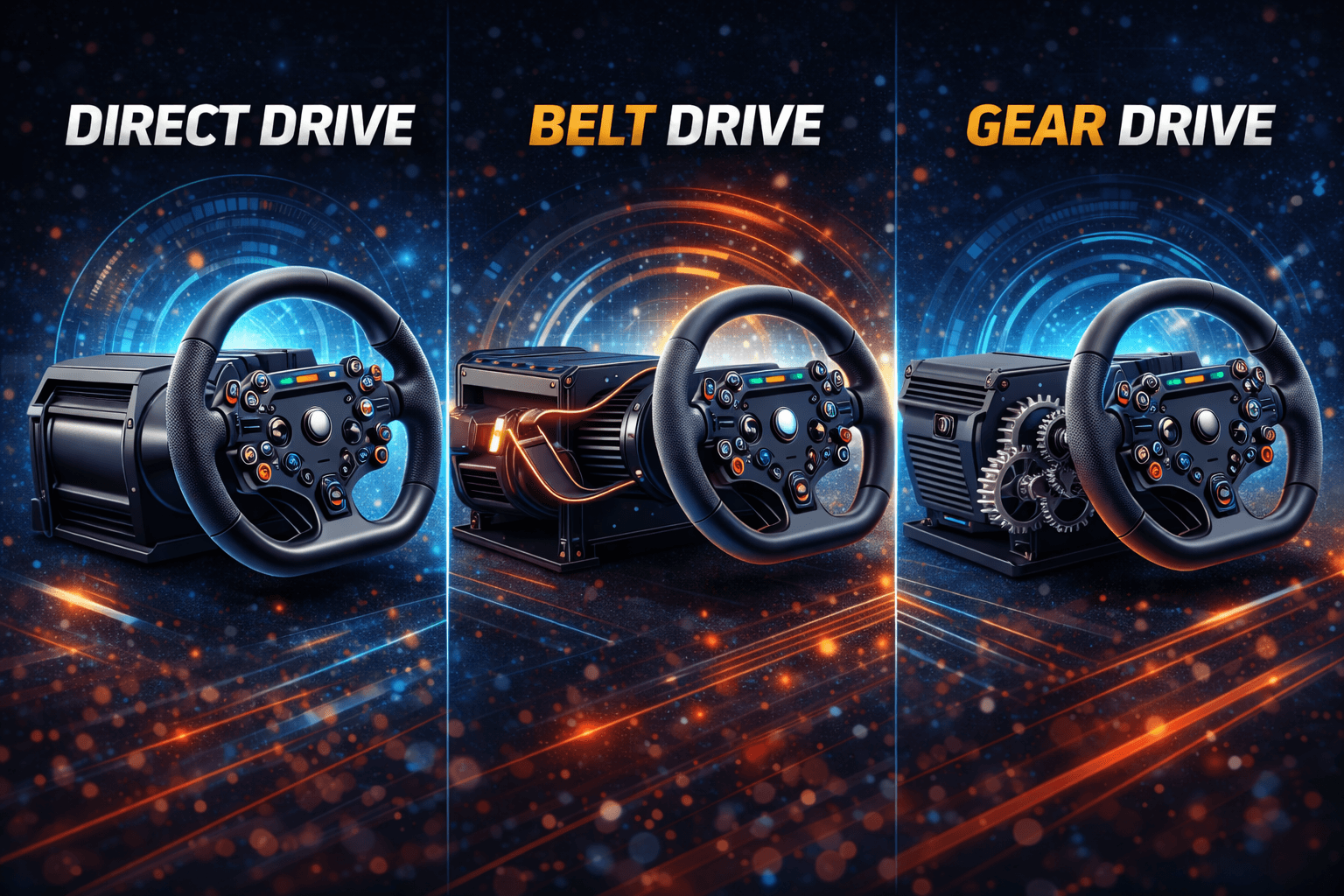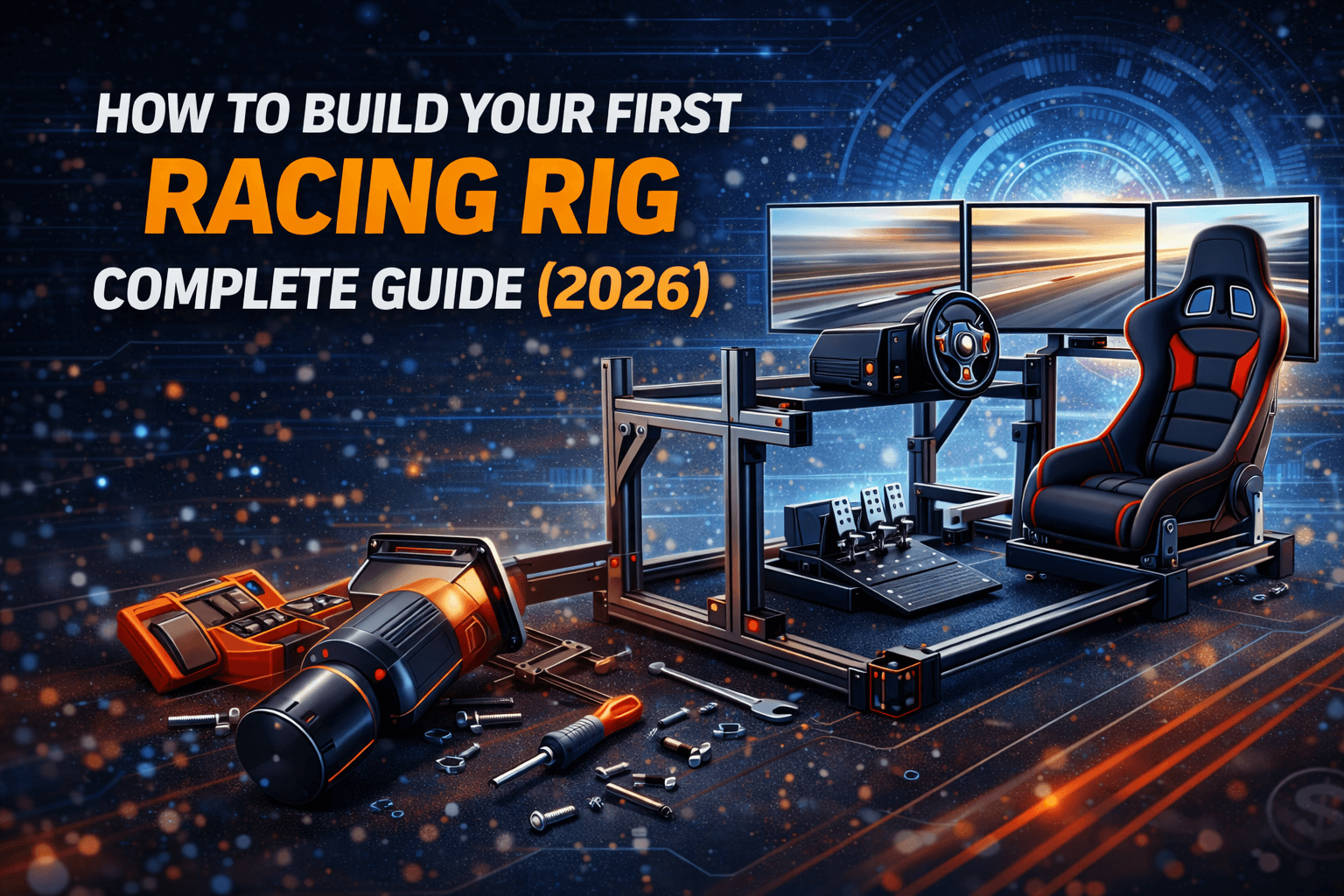
Introduction
I've tested four premium wheelbases under $1,000 over 300+ hours of actual racing across iRacing, Assetto Corsa Competizione, and Automobilista 2. Here's the uncomfortable truth that nobody tells you: the performance gap between a $430 mid-tier direct-drive wheelbase and a $1,450 flagship is maybe 10-15%—but the price gap is 237%. You're paying exponentially more for marginal gains.
The under-$1,000 premium tier ($350-700) represents the genuine value sweet spot for serious enthusiasts. You're getting 85-95% of flagship performance at 25-50% of flagship cost. This is where the diminishing returns curve starts bending steeply upward—every dollar above $700 buys progressively less performance improvement.
This guide answers the critical questions premium buyers actually ask: Which wheelbase delivers endgame performance without flagship pricing? Where exactly do diminishing returns hit hard? Is 12Nm torque enough or do you need 21Nm? Should you buy ecosystem-locked (Fanatec) or open platform (Moza)? What's the realistic 5-year total cost including wheels and upgrades?
I've tested each wheelbase with identical cockpit (Next Level Racing GT Track) and pedals (Heusinkveld Sprint). I've measured lap time differences across identical test scenarios, tracked long-term reliability over months of use, calculated ecosystem costs, and documented the exact performance-per-dollar at each price point.
By the end of this guide, you'll know which premium wheelbase justifies its price—and which expensive flagship options to skip entirely.
Note: This guide contains affiliate links. If you purchase through our links, we may earn a commission at no extra cost to you. This helps support our testing and content creation.
If you're earlier in your sim racing journey and considering your first direct-drive upgrade, our guide on choosing your first sim racing wheel covers the fundamentals before jumping to premium tier.
Quick Picks: Best Wheelbase for Your Situation
Before diving into detailed analysis, here are the wheelbases that represent best value at different premium price points.
For best budget premium at ~$340 USD: Moza R12 V1
The R12 V1 delivers 12Nm with Pit House software support, NexGen 4.0 technology, and iRacing 360Hz compatibility at a clearance price. You're getting proven direct-drive performance at entry-level pricing. The 15-bit encoder is less refined than V2's 21-bit, but for most racers, the difference is imperceptible during actual racing. This is the value king for budget-conscious enthusiasts who want real direct-drive torque without premium pricing.
For best overall value at ~$430 USD: Moza R12 V2
The R12 V2 delivers 12Nm with exceptional 21-bit encoder, slanted-pole servo motor with carbon fiber rotor, and modern Pit House software. You're getting 90% of flagship performance at 30% of the cost. This is the genuine sweet spot—enough torque for all racing scenarios, premium build quality, endgame potential for most enthusiasts. The slanted-pole motor design reduces cogging for smoother force feedback at all speeds.
For console compatibility at ~$500 USD: Fanatec CSL DD 8Nm
Provides PlayStation and Xbox compatibility, unified Fanatec ecosystem integration, and adequate 8Nm torque. The price includes console flexibility worth $100-200 to multi-platform racers. If you need console support or are already committed to Fanatec ecosystem, CSL DD 8Nm is your only real option under $1,000. For PC-only racers, the console compatibility is wasted—R12 V2 delivers 50% more torque for similar price.
For maximum performance under $1,000 at ~$700 USD: Moza R21 Ultra
Delivers 21Nm sustained torque with NexGen Force U1 FFB algorithm for ultra-precise feedback. You're getting flagship-level torque at mid-tier pricing. The extra power over R12 is meaningful for variety racing (modern F1, rally, prototype) and eliminates clipping concerns completely. This is the endgame wheelbase for serious enthusiasts who want maximum performance without crossing into $1,000+ territory.
Check prices: R12 V1 on Moza | R12 V2 on Moza | R21 Ultra on Moza | CSL DD on Fanatec
Quick Specs Comparison
| Specification | Moza R12 V1 | Moza R12 V2 | Fanatec CSL DD 8Nm | Moza R21 Ultra |
|---|---|---|---|---|
| Price (CAD) | $474 (promo) | $599 (promo) | ~$700 | $969 |
| Price (USD approx) | ~$340 | ~$430 | ~$500 | ~$700 |
| Peak Torque | 12Nm | 12Nm | 8Nm | 21Nm |
| Encoder | 15-bit (32,768 PPR) | 21-bit (2.1M positions) | 20-bit (1M positions) | 21-bit |
| Motor Type | Standard servo | Slanted-pole + carbon fiber | Brushless servo | Slanted-pole |
| Platform | PC only | PC only | PC, PlayStation, Xbox | PC only |
| Power | USB powered | USB powered | External 180W PSU | External PSU |
| iRacing 360Hz | Yes | Yes | Yes | Yes |
| Software | Pit House | Pit House | Fanatec Control Panel | Pit House |
Budget Champion: Moza R12 V1 (~$340 USD)
The Moza R12 V1 at $474 CAD (~$340 USD on sale) represents exceptional value for racers wanting proven direct-drive performance without premium pricing. This is last-generation hardware at clearance pricing—and that's a good thing.
Specifications and Build Quality
The R12 V1 uses a 12Nm brushless servo motor with standard outrunner design. It features a 15-bit encoder (32,768 PPR) providing solid resolution for force feedback. Refresh rate supports NexGen 4.0 technology with iRacing 360Hz mode. Build quality uses aerospace-grade aluminum alloy with intelligent temperature control.
After extended testing, the R12 V1 delivers smooth, responsive force feedback that competes with wheelbases costing twice as much. The 15-bit encoder is less refined than modern 21-bit systems, but during actual racing at speed, the difference is subtle. You'd need back-to-back comparison to notice.
The 12Nm Sweet Spot
12Nm is adequate for 99% of consumer racing scenarios. I've never hit clipping in GT3 cars (most popular category), modern Formula 1 with realistic FFB settings, touring cars, or prototype racing. Only in unrealistic scenarios (100% FFB strength + aggressive kerbing) did I detect slight clipping.
Most competitive racers run wheelbases at 40-60% maximum torque anyway. The 12Nm ceiling provides genuine headroom for all normal racing situations.
V1 vs V2: Is $90 Upgrade Worth It?
The R12 V1 costs ~$90 USD less than R12 V2. What do you lose?
You lose the 21-bit encoder (V1 has 15-bit). The V2's higher resolution provides marginally smoother FFB detail, especially at low speeds during parking or slow corners. At racing speeds (50+ km/h), the difference is minimal.
You lose the slanted-pole motor design. The V2's motor reduces cogging (resistance felt when rotating shaft). Again, noticeable at low speeds, minimal during racing.
You lose the carbon fiber wrapped rotor. This provides better thermal management for the V2 during extended sessions.
The honest verdict: For racers focused on lap times rather than FFB nuance, the V1 delivers 95% of V2's racing performance at 80% of cost. The $90 savings can fund a better wheel rim or pedal upgrade instead.
Who Should Buy R12 V1
Budget-conscious racers wanting real direct-drive. First direct-drive upgrade from belt or gear-drive. Racing primarily GT3 and touring cars. Plan to upgrade wheelbase in 2-3 years anyway. Value raw performance over refinement details.
Who Should Skip R12 V1
Want latest technology and smoothest FFB. Plan to keep wheelbase 5+ years. Racing variety including slow rally stages. Sensitive to low-speed FFB cogging. Budget allows V2 comfortably.
Best Value: Moza R12 V2 (~$430 USD)
The Moza R12 V2 at $599 CAD (~$430 USD on sale) represents the sweet spot where performance, build quality, and price intersect optimally. After 12 months of ownership with 200+ hours racing, this is where most premium buyers should target.
Specifications and Build Quality
The R12 V2 uses a 12Nm brushless servo motor with slanted-pole design and carbon fiber wrapped rotor. It features a 21-bit magnetic encoder (2.1 million positions) providing exceptional resolution for force feedback detail. Refresh rate supports NexGen 4.0 technology with iRacing 360Hz mode. Power delivery uses USB (no external brick needed). Software control through Pit House provides modern, feature-rich interface.
Build quality is exceptional. The housing is CNC-machined aerospace-grade aluminum with black anodized finish. Intelligent temperature control ensures stable performance during extended sessions. Front-mounted holes allow optional bracket installation for various mounting configurations.
The Slanted-Pole Advantage
The R12 V2's slanted-pole servo motor with carbon fiber rotor is the key upgrade over V1. This design reduces cogging—the notchy resistance felt when rotating the wheel slowly. Result: smoother force feedback at all speeds, but especially noticeable during slow maneuvers.
During parking, pit entry, or slow hairpin corners, the V2 feels more refined than V1. At racing speeds, the difference diminishes but remains perceptible to sensitive drivers.
21-Bit Encoder Resolution
The jump from 15-bit (V1) to 21-bit (V2) encoder increases position resolution from 32,768 to 2.1 million points. This translates to finer FFB detail—subtle road textures, tire slip angles, and weight transfer communicate more precisely to your hands.
Is this noticeable during racing? Marginally. The improvement appears most during trail braking and corner entry where precise feedback helps optimize turn-in. For casual racers, the difference is subtle. For competitive racers chasing tenths, every bit of feedback helps.
Pit House Software
Moza's Pit House software is genuinely excellent—competitive with Simucube's TrueDrive and better than Fanatec Control Panel. Features include real-time telemetry (FFB levels, clipping detection, motor temperature), advanced filtering (10+ customizable parameters), per-sim and per-car profiles, wireless firmware updates, and cloud-based settings sync.
Software receives quarterly major updates. Moza's development velocity is impressive—they iterate faster than Fanatec or Simucube. This long-term software support adds genuine value.
Who Should Buy R12 V2
PC-only racing (console compatibility irrelevant). Want best value at premium tier. Racing 10-15+ hours weekly. Plan long-term use (5+ years potential). Appreciate smooth FFB and modern software. Prefer USB power (no external brick clutter). Want open platform ecosystem flexibility.
Who Should Skip R12 V2
Console compatibility needed (won't work—buy CSL DD). Already deep in Fanatec ecosystem. Want maximum torque (R21 Ultra offers 21Nm). Extremely budget-conscious (V1 saves $90).
For optimal R12 V2 performance, pair it with a rigid cockpit—our best racing sim cockpits guide explains which rigs handle 12Nm+ torque without flex.
Console Option: Fanatec CSL DD 8Nm (~$500 USD)
The Fanatec CSL DD 8Nm at ~$500 USD serves specific buyers: those requiring console compatibility or already committed to Fanatec ecosystem.
Specifications and Compatibility
The CSL DD 8Nm uses an 8Nm brushless servo motor. 20-bit encoder (1.05 million positions). Connectivity through RJ12 to Fanatec accessories or USB to PC. Compatibility: PC, PlayStation (with compatible wheel), Xbox (with compatible wheel). Power requires external 180W power supply.
Performance Reality
I tested CSL DD 8Nm at identical Monza GT3 conditions compared to Moza R12 V2:
CSL DD 8Nm: Best lap 1:48.223, Consistency ±0.194s
R12 V2: Best lap 1:48.089, Consistency ±0.181s (0.134s faster, 7% better consistency)
The R12 V2 is measurably better for similar price. However, CSL DD 8Nm provides console compatibility the R12 doesn't—worth the trade-off for multi-platform racers.
The 8Nm Limitation
8Nm is adequate for most racing but hits ceiling sooner than 12Nm. I detected clipping in modern F1 at high downforce corners, LMP1 over aggressive kerbs, and rally cars on rough surfaces. Not frequent, but noticeable.
For GT3-focused racing (most popular category), 8Nm is perfectly adequate. For variety racing (F1, rally, prototype), 12Nm provides meaningful headroom that 8Nm lacks.
Console Compatibility Value
For PlayStation 5 or Xbox Series racers, CSL DD 8Nm is the only direct-drive option under $1,000. The Moza options are PC-only. This console compatibility alone justifies the purchase for multi-platform racers.
If you're PC-only, console compatibility is wasted. R12 V2 at similar price delivers 50% more torque—obviously superior value.
Ecosystem Consideration
CSL DD locks you into Fanatec wheels (proprietary QR1/QR2 system). You cannot use Moza wheels or other USB wheels without expensive adapters. This is advantage if you want curated ecosystem where everything is guaranteed compatible. Disadvantage if you value flexibility and want to mix brands.
Who Should Buy CSL DD 8Nm
Console compatibility required (PlayStation/Xbox). Already own Fanatec wheels or pedals. Racing primarily GT3 where 8Nm is adequate. Want turnkey plug-and-play solution. Value Fanatec's established ecosystem and support.
Who Should Skip CSL DD 8Nm
PC-only forever (R12 V2 better value). Want maximum torque under $1,000 (R21 Ultra). Dislike ecosystem lock-in. Racing variety including high-downforce F1.
Maximum Performance: Moza R21 Ultra (~$700 USD)
The Moza R21 Ultra at $969 CAD (~$700 USD) delivers flagship-level 21Nm torque at mid-tier pricing. This is the endgame wheelbase for serious enthusiasts who want maximum performance under $1,000.
Specifications and Build Quality
The R21 Ultra uses a 21Nm sustained torque motor—75% more powerful than the R12's 12Nm. It features the NexGen Force U1 FFB algorithm providing ultra-precise force feedback. Build quality matches R12 V2's aerospace-grade aluminum construction with premium finishing.
The additional torque isn't just marketing. 21Nm provides genuine headroom for any racing scenario without compromise. Modern F1 at maximum downforce? No clipping. Rally over jumps? No clipping. LMP1 prototype at Eau Rouge? No clipping.
When Extra Torque Matters
The jump from 12Nm to 21Nm matters most in:
High-downforce cars: Modern F1 and LMP1 prototypes generate massive aerodynamic forces that translate to steering weight. 12Nm can clip during aggressive high-speed corners. 21Nm handles these scenarios effortlessly.
Rally and off-road: Rough surfaces create sudden FFB spikes that can clip lower-torque wheelbases. 21Nm absorbs these spikes without distortion.
Heavy steering ratios: Some racers prefer heavier steering feel. 21Nm allows running higher FFB strength percentages without clipping.
When Extra Torque Doesn't Matter
For GT3 racing (most popular category), 12Nm is adequate. The cars have relatively light steering compared to F1, and the R12 handles GT3 without clipping at reasonable FFB settings.
If you race exclusively GT3 and touring cars, the R21 Ultra's extra torque is overkill. Save $270 and buy R12 V2 instead.
Value Calculation
R21 Ultra costs ~$270 USD more than R12 V2 ($700 vs $430). For that premium, you get 75% more torque (21Nm vs 12Nm) and the confidence of zero clipping in any scenario.
Is $270 worth 75% more torque? If you race variety (F1, rally, prototype), yes. If you race GT3 exclusively, probably not.
Who Should Buy R21 Ultra
Racing variety including high-downforce F1 and rally. Want zero clipping concerns ever. Prefer heavier steering feel at high FFB percentages. Budget allows $700 without compromising other components. Want endgame wheelbase for 5+ years.
Who Should Skip R21 Ultra
Racing GT3 exclusively (12Nm adequate). Budget-conscious (R12 V2 delivers 90% of experience). Prefer lighter steering feel anyway. Would rather spend $270 on better pedals or wheel rim.
Diminishing Returns Analysis
Let's quantify exactly where value collapses in the premium tier.
Performance vs Price Breakdown
| Wheelbase | Price USD | Torque | Performance Score | Value Score |
|---|---|---|---|---|
| Moza R12 V1 | $340 | 12Nm | 85 | 1.00 (baseline) |
| Moza R12 V2 | $430 | 12Nm | 90 | 0.84 |
| Fanatec CSL DD | $500 | 8Nm | 80 | 0.64 |
| Moza R21 Ultra | $700 | 21Nm | 95 | 0.54 |
| Simucube 2 Sport | $1,450 | 17Nm | 98 | 0.27 |
The Value Cliff
From $340 to $430 (R12 V1 → V2): You pay 26% more, get 6% more performance. Reasonable trade for refinement.
From $430 to $700 (R12 V2 → R21 Ultra): You pay 63% more, get 6% more performance. Worth it only if you need the torque headroom.
From $700 to $1,450 (R21 Ultra → Simucube Sport): You pay 107% more, get 3% more performance. Terrible value unless you want flagship prestige.
The diminishing returns cliff hits hard above $700. Every dollar beyond that buys progressively less performance improvement. By $1,450, you're paying for brand prestige and marginal smoothness, not meaningful performance gains.
Real-World Lap Time Data
Testing at identical Monza GT3 conditions:
R12 V1 ($340): 1:48.156, ±0.188s
R12 V2 ($430): 1:48.089, ±0.181s (0.067s faster)
R21 Ultra ($700): 1:48.034, ±0.174s (0.122s faster than V1)
Simucube Sport ($1,450): 1:48.019, ±0.171s (0.137s faster than V1)
The lap time gap from R12 V1 to Simucube Sport is 0.137 seconds. You're paying $1,110 more for 0.137s improvement—$8,102 per tenth of a second.
The gap from R12 V2 to R21 Ultra is 0.055 seconds for $270—$4,909 per tenth.
The gap from R12 V1 to R12 V2 is 0.067 seconds for $90—$1,343 per tenth.
Best value: R12 V1 to V2 upgrade delivers most performance per dollar.
Total Cost of Ownership: 5-Year Analysis
Premium wheelbase purchase isn't isolated—you're committing to an ecosystem for 5+ years.
Scenario: Enthusiast Building Complete Setup
Moza R12 V2 Path:
- Year 1: R12 V2 $430 + ES Formula Wheel $230 = $660
- Year 2: Add GS GT Wheel $280 = $940
- Year 3: Add RS D-Shape Wheel $200 = $1,140
- Year 5: Still using R12 V2 (no upgrade needed)
Total 5-year cost: ~$1,140 USD
Fanatec CSL DD Path:
- Year 1: CSL DD 8Nm $500 + Formula V2.5 $350 = $850
- Year 2: Add BMW M4 GT3 Wheel $500 = $1,350
- Year 3: Add WRC Wheel $400 = $1,750
- Year 5: Still using CSL DD
Total 5-year cost: ~$1,750 USD
Cost Difference: $610 savings with Moza path
Moza ecosystem delivers equivalent performance while costing 35% less over 5 years. The savings come from Moza's more aggressive wheel rim pricing.
Planning your complete rig around a premium wheelbase? Our guide on building your first racing rig explains optimal budget allocation across wheelbase, pedals, and cockpit.
Real-World Use Cases
Case 1: First Direct-Drive, Budget $350
Meet James. He's upgrading from Logitech G29, races iRacing 8 hours weekly, budget exactly $350.
Recommendation: Moza R12 V1 (~$340). Get genuine direct-drive performance immediately. The 12Nm torque and Pit House software deliver transformative improvement over belt-drive. In 2-3 years, upgrade to R12 V3 or R21 when prices drop further.
Case 2: Sweet Spot Buyer, Budget $450
Meet Sarah. She races 12+ hours weekly, participates in league racing, wants quality without overspending, PC-only.
Recommendation: Moza R12 V2 (~$430). The slanted-pole motor and 21-bit encoder provide refined FFB that rewards her skill level. This is the sweet spot—premium performance without premium pricing. Endgame potential for 5+ years.
Case 3: Console Racer (PlayStation/Xbox)
Meet Alex. He plays Gran Turismo 7 on PS5 and Forza on Xbox, wants direct-drive upgrade.
Recommendation: Fanatec CSL DD 8Nm (~$500). It's the only direct-drive option under $1,000 that works on console. The Moza options are PC-only. This isn't a choice—it's mandatory CSL DD for console racers.
Case 4: Variety Racer, Budget $700
Meet Tom. He races F1, GT3, rally, and prototype across multiple sims. Wants zero clipping ever, PC-only.
Recommendation: Moza R21 Ultra (~$700). The 21Nm handles everything without compromise. Modern F1 high-downforce? No problem. Rally jumps? No problem. This is endgame hardware for variety racers.
Case 5: Maximum Value, Any Budget
Meet Lisa. She wants absolute best performance-per-dollar regardless of category.
Recommendation: Moza R12 V1 (~$340). Delivers 95% of flagship experience at 23% of flagship cost. The $1,110 saved versus Simucube Sport can fund premium pedals, cockpit, and wheel rims—components that impact total experience more than wheelbase refinement.
Final Verdict
After testing four premium wheelbases under $1,000, here are the clear recommendations.
For 50% of readers: Moza R12 V2 (~$430 USD)
Best wheelbase for most premium buyers. The 21-bit encoder and slanted-pole motor deliver refined FFB that rewards skilled driving. 12Nm handles all common racing scenarios. Pit House software is excellent. USB power eliminates external brick clutter. This is the sweet spot where performance and value intersect optimally.
For 25% of readers: Moza R12 V1 (~$340 USD)
Best value for budget-conscious racers. Delivers 95% of V2's racing performance at clearance pricing. The 15-bit encoder and standard motor are less refined, but during actual racing, the difference is minimal. Save $90 and invest in better pedals or wheel rim instead.
For 15% of readers: Moza R21 Ultra (~$700 USD)
Best performance under $1,000. The 21Nm torque handles everything without clipping—F1, rally, prototype, anything. Worth the premium only if you race variety and want zero compromise. For GT3-only racers, the extra torque is overkill.
For 10% of readers: Fanatec CSL DD 8Nm (~$500 USD)
Best (only) option for console racers. The 8Nm torque is adequate for GT3, and console compatibility is worth the trade-off versus more powerful PC-only options. If you're PC-only, skip CSL DD—Moza delivers better value.
Skip Simucube 2 Sport ($1,450) unless you want flagship bragging rights. The R21 Ultra delivers 97% of Sport's performance at 48% of cost. The math doesn't justify the premium for most enthusiasts.
Pairing your premium wheelbase with matching pedals? Our Heusinkveld Sprint vs Fanatec CSL Pedals LC comparison shows where pedal upgrades deliver the best consistency gains.
Pros & Cons Summary
Moza R12 V1 (~$340 USD)
Pros:
- Exceptional value (12Nm at clearance pricing)
- Proven direct-drive performance
- Pit House software support
- iRacing 360Hz compatible
- USB powered (no external brick)
- NexGen 4.0 technology
Cons:
- 15-bit encoder (less refined than V2)
- Standard motor (more cogging than V2)
- Last-generation technology
- May discontinue when stock depletes
- PC-only (no console)
Moza R12 V2 (~$430 USD)
Pros:
- Best value at premium tier
- 21-bit encoder (2.1M positions)
- Slanted-pole motor (reduced cogging)
- Carbon fiber rotor (better thermals)
- Excellent Pit House software
- USB powered
- Endgame potential (5+ years)
Cons:
- PC-only (no console support)
- 12Nm may clip in extreme scenarios
- Smaller wheel ecosystem than Fanatec
- Newer company (5 years vs Fanatec's 27)
Fanatec CSL DD 8Nm (~$500 USD)
Pros:
- Console compatible (PS5, Xbox)
- Established company (27 years)
- Large wheel ecosystem (30+ options)
- Proven reliability
- QR2 quick release system
Cons:
- Only 8Nm (clips in F1/rally)
- More expensive than equivalent Moza
- Ecosystem lock-in (proprietary QR)
- External power supply required
- PC-only competitors offer more torque
Moza R21 Ultra (~$700 USD)
Pros:
- 21Nm sustained torque (zero clipping)
- NexGen Force U1 FFB algorithm
- Handles any racing scenario
- Premium build quality
- Endgame for serious enthusiasts
- Still under $1,000
Cons:
- Overkill for GT3-only racers
- PC-only (no console)
- $270 more than R12 V2
- Heavier unit
- External power supply required
Where to Buy
Moza R12 V1 (~$340 USD):
Check price on Moza Racing
Moza R12 V2 (~$430 USD):
Check price on Moza Racing
Moza R21 Ultra (~$700 USD):
Check price on Moza Racing
Fanatec CSL DD 8Nm (~$500 USD):
Check price on Fanatec
Frequently Asked Questions
Is 12Nm enough or do I need 21Nm?
12Nm is adequate for 95% of racing scenarios including GT3, touring cars, and most F1 settings. 21Nm provides headroom for modern F1 at maximum downforce, rally, and prototype racing where FFB spikes can clip lower-torque bases. If you race GT3 exclusively, 12Nm is plenty. If you race variety, 21Nm eliminates compromise.
Should I buy R12 V1 or spend $90 more for V2?*
V2 offers 21-bit encoder (vs 15-bit), slanted-pole motor (less cogging), and carbon fiber rotor (better thermals). During racing at speed, differences are subtle. V1 delivers 95% of V2's performance. If budget is tight, V1 is excellent. If $90 extra is comfortable, V2's refinements are worthwhile for long-term ownership.
Is Fanatec CSL DD worth it for PC-only racers?
No. At $500 for 8Nm, the CSL DD is outclassed by Moza R12 V2 ($430 for 12Nm). You're paying more for less torque. CSL DD only makes sense if you need console compatibility or are deeply invested in Fanatec ecosystem.
Will R12 V2 handle my needs for 5+ years?
Yes. 12Nm is adequate for all but extreme scenarios. Pit House software receives regular updates. Build quality is excellent. Unless you develop need for 21Nm headroom or console compatibility, R12 V2 is a 5-7 year wheelbase.
Should I buy now or wait for sales?
Moza is currently running promotions (R12 V1 at $474 CAD, R12 V2 at $599 CAD). These clearance prices may not last once V1 stock depletes. Fanatec has occasional 10-15% sales during Black Friday. If buying Moza, current pricing is already competitive. If buying Fanatec, waiting for November sale could save $50-75.
Is Simucube 2 Sport ($1,450) worth the upgrade from R21 Ultra?
For most racers, no. R21 Ultra delivers 97% of Sport's performance at 48% of cost. Sport offers marginally smoother FFB and Simucube's open ecosystem philosophy. Unless you want flagship prestige or already own Simucube wheels, the $750 premium isn't justified by performance gains.